Building an Online Therapy Practice: Platform, Data Privacy, Technical Setup, and Session Management
Learn how to set up an online therapy practice: platform selection, data privacy compliance, technical infrastructure, payment systems, and session management with Turkey-specific regulations and current data.
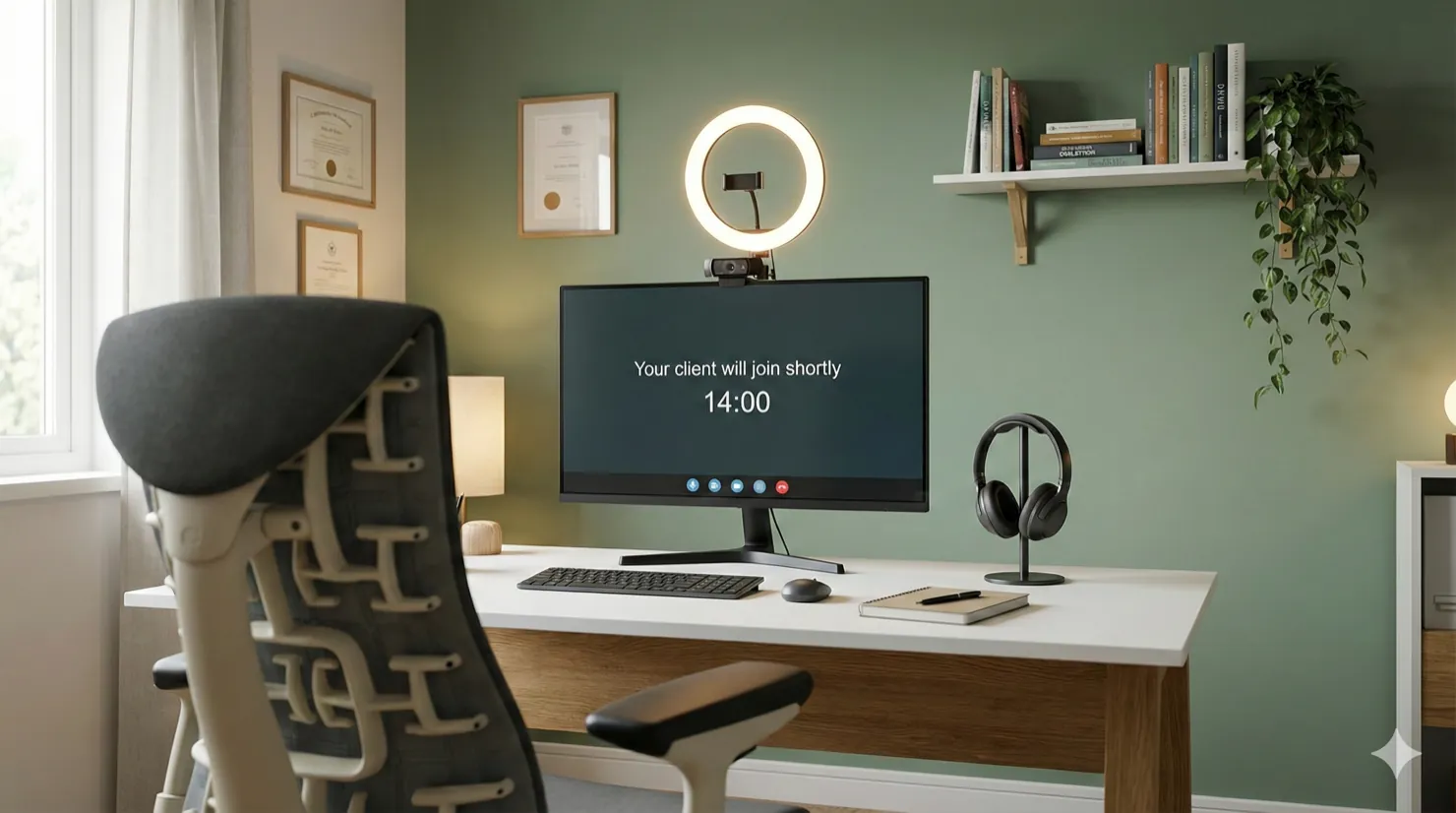
Since the March 29, 2025 Turkish independent practice regulation, online therapy in Turkey must be conducted through a licensed practice; pure home-based (unlicensed) online practice is no longer legal. This guide covers platform choice, data privacy compliance, technical infrastructure, and payment systems specific to Turkey practice.
The Therapy Room on the Other Side of the Screen
After the pandemic, online therapy has evolved from a necessity into a permanent practice model. As of 2026, many clinical psychologists in Turkey deliver a significant portion of their services online. While platforms like Terappin, Hiwell, and Heltia reach hundreds of thousands of clients, many therapists work independently through Zoom or Google Meet.
However, online therapy is not simply "opening Zoom and having a conversation." Platform selection, data security (KVKK — Turkey's data protection law), technical infrastructure, payment methods, regulatory compliance, and session management differences are all topics that require separate consideration. While client-facing "what is online therapy" content is abundant, a comprehensive setup guide from the therapist's perspective is virtually nonexistent in Turkish.
In this post, we cover every component needed for therapists who want to build an online therapy practice from scratch, with Turkey-specific current data.
Why It Matters
An unstructured online practice does not just damage professional image; it carries legal risk. Data privacy violations can result in significant administrative fines, sessions conducted on insecure platforms compromise client confidentiality, and lacking a clear crisis protocol limits emergency response capacity. Building an online therapy practice deliberately and with proper structure protects both client safety and therapist sustainability.
Platform Selection: Marketplace or Independent?
There are two fundamental ways to deliver online therapy: joining a therapy marketplace platform or building your own independent infrastructure. Each has its advantages and limitations.
Therapy Marketplace Platforms
Platforms like Terappin, Hiwell, Heltia, and Evimdeki Psikolog operate on a marketplace model that matches clients with therapists. These platforms offer client acquisition, appointment management, payment processing, and video infrastructure under one roof.
The advantages are clear: a ready client pool, technical infrastructure responsibility belonging to the platform, and low initial investment. However, the disadvantages are significant: platform commissions (not publicly disclosed but reportedly substantial), session fees being set or limited by the platform, client data belonging to the platform, and limited brand independence.
Evimdeki Psikolog is one of the few platforms certified by the Ministry of Health's Remote Health Information System (USBS). This can make a significant difference in terms of regulatory compliance.
Independent Practice
An independent therapist sets up their own video conferencing tool, payment system, and appointment management. Tools like Zoom, Google Meet, or Doxy.me can be used.
- Zoom: The most widely used tool in Turkey. HIPAA-compliant version available with end-to-end encryption (E2EE), waiting room, and session recording features. Pro plan requires a monthly subscription.
- Google Meet: SSL/TLS encryption, browser-based (no download required). Enhanced features available with Google Workspace subscription. Google Calendar integration is practical.
- Doxy.me: A platform specifically designed for healthcare professionals, HIPAA-compliant. Free basic plan available. Limited usage in Turkey.
The advantage of independent practice is full control: your fee policy, client data, and brand belong to you. The disadvantage is the need to manage every component yourself.
KVKK and Data Security
Under KVKK (Personal Data Protection Law No. 6698), health data is classified as "sensitive personal data." Therapy session notes, diagnostic information, treatment plans, and all health-related information shared by the client fall into this category.
As professionals bound by confidentiality obligations, clinical psychologists are theoretically not required to obtain explicit consent for processing health data for treatment purposes. However, in online therapy practice, because data is stored digitally and processed through third-party platforms, obtaining written explicit consent (informed consent) is strongly recommended.
KVKK Obligations for Online Therapy
- Disclosure Obligation: The client must be clearly informed about what data is collected, for what purpose, how it is processed, and with whom it is shared.
- Technical Measures: Encryption, access control, firewalls, and backup measures are mandatory. Therapy notes must be stored encrypted.
- Session Recording Policy: Whether sessions are recorded must be explicitly stated. General practice: sessions are not recorded. If recorded, explicit consent must be obtained.
- Data Breach Notification: In case of a data breach, notification to the KVKK Board within 72 hours is mandatory.
- Data Storage Location: Therapy notes stored digitally should be kept on servers located within Turkey. KVKK restricts cross-border data transfer.
Regulations: SMHB Directive and Remote Work
The Regulation on Independent Practice of Health Professionals, dated March 29, 2025, is the most critical regulation for online therapy practice. According to this regulation, only clinical psychologists can establish a "Health Professional Service Unit" (SMHB) and provide independent therapy services.
The regulation imposes physical space requirements: a minimum 10 m² practice room for each clinical psychologist, a waiting area (minimum 8 m²), restroom, and reception area are mandatory. A license must be obtained from the Provincial Health Directorate.
Critical point: The regulation does not explicitly address online therapy delivery by clinical psychologists working from home. This creates uncertainty about whether psychologists who only provide online services must rent a physical office and obtain a license. In practice, many clinical psychologists provide online therapy services working from home. The legal outcome of this situation will be shaped by Ministry of Health implementations and administrative court decisions.
The TPD Ethical Guidelines state that all ethical rules must be followed when providing psychological services in online settings. It notes that online settings carry risks not expected in face-to-face therapy, and that services should not be provided in settings where compliance with any ethical rule becomes impossible.
Technical Infrastructure
Online therapy is a professional service delivery. Your technical infrastructure directly affects the client's experience and the quality of the therapeutic process.
Minimum Requirements
- Internet speed: Minimum 1 Mbps upload and download. Recommended: 10+ Mbps stable connection. Fiber infrastructure is preferred.
- Device: Prefer a desktop or laptop computer. A larger screen provides a more professional experience for both therapist and client. Tablets or smartphones should be considered as emergency backups only.
- Camera and microphone: The built-in camera may suffice, but an external HD webcam significantly improves video quality. An external microphone or headset improves audio quality.
- Lighting: Proper face illumination is critical for therapeutic communication. Natural light or a ring light is recommended. Backlighting (light from a window behind you) darkens the face.
- Environment: A quiet, private, and interruption-free room. The client's voice should not be audible from outside. Use an "In Session" sign or indicator.
Backup Plan for Connection Drops
Internet connections can drop at any time. Clearly establish the connection drop protocol with the client at the start of the session:
- Try to reconnect on the same platform within the first 2-3 minutes.
- If you cannot reconnect, continue the session via phone call.
- If neither party can connect, reschedule the session. Keep a mobile hotspot (4G/5G) ready as a backup internet source.
- Designate an alternative platform: if Zoom fails, try Google Meet; if that fails, use phone.
Payment Systems
Payment management in online therapy carries different dynamics from in-person practice. Several primary methods stand out for independent therapists in Turkey.
Bank Transfer (EFT/Wire)
This is the most commonly used method. The client makes payment via bank transfer before the session and sends confirmation. The advantage is no or very low commission. The disadvantage is that it requires manual tracking.
Payment Link (iyzico / PayTR)
BDDK-authorized payment institutions like iyzico and PayTR offer payment link creation. The therapist sends a payment link to the client via WhatsApp, email, or SMS; the client pays by credit card. This provides automatic confirmation and tracking. It is the most practical digital solution for independent therapists.
Platform-Based Collection
Marketplace platforms like Terappin and Hiwell process payments through their own systems. The platform deducts a commission. The therapist receives payment through the platform.
Stripe cannot be used directly in Turkey. A company established in Turkey cannot officially process payments through Stripe.
For detailed information on fee setting, payment timing, and cancellation fees, see our therapeutic framework building guide.
Online Session Management Differences
Online therapy differs from face-to-face therapy in several important ways. Knowing these differences and making appropriate adaptations maintains your clinical quality.
Screen Fatigue (Zoom Fatigue)
Constant screen viewing, self-image monitoring, and limited movement space during video sessions create fatigue. Solutions: setting session duration to 45 minutes, taking at least 15-minute breaks between sessions, and limiting daily online sessions (4-5 sessions/day maximum).
Non-Verbal Cues
In online settings, body language, facial expressions, and posture can only be partially observed — usually only the face and shoulders are visible. The therapist should pay more attention to voice tone changes, facial expressions, and eye contact. More frequent check-ins with direct questions like "how are you feeling" should be conducted.
Crisis Management
The biggest challenge in online settings is acute crisis situations: suicide risk, self-harm, or violence. Physical intervention is not possible. Therefore, mandatory protocols must be established:
- Verify the client's physical address before each session.
- Keep emergency contact information updated.
- Have 112 Emergency Services and national crisis hotline information readily available.
- Consider referral to face-to-face therapy for severe psychiatric conditions or active crises.
For detailed information on creating crisis and safety plans, see our crisis and safety plan guide.
The Client's Environment
The client being in their own home can be both an advantage and disadvantage. Feeling safe is a positive factor, while distracting elements (family members, pets, phone) and privacy concerns (risk of others overhearing) can have negative effects. Briefly verifying the client's suitable environment at the start of the session is good practice.
e-SMM and Tax Obligations
There is no difference between online and in-person therapy from a tax perspective. In both cases, income is declared as self-employment income and e-SMM (electronic self-employment receipt) is issued.
e-SMM use is mandatory for all self-employed professionals. Transition to the e-SMM system must be completed within 3 months of starting business. An e-signature or financial seal is required to issue e-SMM.
VAT Rates
- Clinical psychologist with Ministry of Health license: 8% VAT
- Psychologist without Ministry of Health license / psychological counseling: 20% VAT
Since the March 2025 regulation made it mandatory for all clinical psychologists to obtain a license from the Provincial Health Directorate, psychologists with a license apply 8% VAT while those without apply 20%.
Tax-Deductible Expenses
- Internet bills
- Computer and equipment (camera, microphone, lighting)
- Software subscriptions (Zoom Pro, therapy platform, etc.)
- Platform commissions
- Office rent (if physical space exists)
- Accountant fees
Clinical Example: Elif, 32, Setting Up Her Online Practice
After working at a private center in Ankara for 4 years, Elif decided to establish an independent online practice. She has EMDR and CBT training. She wants to see clients from both Ankara and other cities.
Platform: She got a Zoom Pro subscription (monthly). Uses Google Meet as backup. Did not register with a marketplace platform — she preferred building her own client network.
Technical Setup: Fiber internet (50 Mbps). Purchased an external HD webcam and headset. Placed a ring light in her office. Keeps phone hotspot ready as backup internet.
KVKK Compliance: Added KVKK disclosure text to her informed consent form. Stated in writing that sessions are not recorded. Stores therapy notes in encrypted digital storage.
Payment: Uses iyzico payment links. Sends a payment link to each client before the session. Issues e-SMM through Parasut.
Session Structure: Individual session: 50 minutes. Maximum 5 online sessions per day. 15-minute breaks between sessions. Connection drop protocol shared with each client at the first session.
Crisis Protocol: Physical address and emergency contact for each client is on file. Individually evaluates online therapy suitability for high-risk clients.
Online Therapy Launch Checklist
Regulations and Licensing
Check your licensing status with the Provincial Health Directorate. Evaluate your obligations under the SMHB regulation.
Platform Selection
Choose your video conferencing tool (Zoom Pro, Google Meet, Doxy.me). Evaluate encryption and privacy features.
Technical Infrastructure
Test your internet speed. Set up camera, microphone, lighting, and room arrangement. Prepare a backup internet source.
KVKK Compliance
Prepare disclosure texts and explicit consent forms. Define your data storage and encryption policy.
Payment System
Choose your payment method (bank transfer, payment link, platform). Set up your e-SMM infrastructure (e-signature/financial seal).
Clinical Protocols
Prepare connection drop protocol. Define crisis management protocol. Establish your online therapy suitability assessment criteria.
Informed Consent
Add online therapy-specific items to your informed consent form: session recording policy, data security, connection drop procedure, crisis protocol.
Common Mistakes
Ignoring KVKK
Health data is sensitive personal data, and violations can result in serious penalties. The "I work small-scale, it doesn't concern me" approach carries legal risk. Disclosure texts and data security measures are mandatory at all scales.
Working Without a Backup Plan
Not knowing what to do when the connection drops creates stress for both therapist and client and reduces the session's therapeutic value. Even a simple protocol like "if the connection drops, we'll continue by phone" at the start of the session makes a big difference.
Accepting Every Client for Online Therapy
Online therapy may not be appropriate for clients with active suicidal ideation, serious psychotic symptoms, severe dissociation, or substance use crises. Conducting an online therapy suitability assessment is a clinical responsibility.
Neglecting Professional Environment Standards
Conducting sessions from the bedroom, kitchen, or common areas damages the professional image and increases privacy risks. Creating a quiet, private, and professional-looking workspace is a fundamental requirement of online therapy.
Online Therapy Practice with Mindora
Managing each component discussed in this article, platform selection, data privacy compliance, payment tracking, and session management, on a single platform increases the consistency of your online practice. Mindora helps you integrate these components:
- Appointments and Reminders: Structure appointment management with online session calendar, automatic reminder messages, and Google Calendar integration.
- Payment Tracking: Manage financial tracking on a single screen with client-specific fee definitions, payment records, payment link creation, and e-SMM integration.
- Clinical Notes: Document your online sessions in a structured way with session note, formulation, and treatment plan templates.
- Client Profile: Keep all client information in a single profile including contact details, emergency contact, physical address, and consent status.
Manage all your clinical records integrated with the clinical documentation system: session notes, formulation, treatment plan, and progress tracking on the same platform.
Frequently Asked Questions
This Article is Part of the Practice Management Series
This article is one of the deep-dive posts in the practice management series. You can explore the other articles in the series below.
Therapist Practice Management Guide: From Framework to Visibility
Build a sustainable therapy practice — from setting fees and boundaries to launching online sessions and getting found on Google. The complete practice management roadmap.
Building a Therapeutic Framework: Fees, Cancellation Policy, and Professional Boundaries
Learn fee setting, cancellation policy design, session duration standards, and communication boundaries with Turkey-specific data and practical examples.
SEO Guide for Therapists: How to Get Found on Google
Set up your Google Business Profile, conduct keyword research, optimize for local SEO, register on therapy directories, and leverage social media to help clients find you.
KVKK Guide for Therapists: How to Protect Client Data
Understand KVKK obligations for therapists: special category health data, privacy notices, consent management, data security measures, and WhatsApp risks.
Opening a Therapy Practice in Turkey: Complete Guide
Guide to opening a therapy practice in Turkey: licensing process, tax registration, SGK obligations, location selection, and clinical infrastructure setup.
Accounting for Therapists: Tax, SGK, and e-Invoice Guide
Learn self-employment tax obligations, SGK contributions, KDV exemptions, e-SMM requirements, and accounting integration for therapy practices in Turkey.
References
- Republic of Turkey Ministry of Health (2022). Regulation on the Delivery of Remote Health Services. Official Gazette, February 10, 2022.
- Republic of Turkey Ministry of Health (2025). Regulation on Independent Practice of Health Professionals. Official Gazette, March 29, 2025.
- Personal Data Protection Authority (KVKK). Personal Data Protection Law No. 6698 — Sensitive Personal Data (Article 6).
- Turkish Psychologists' Association (2004). Ethical Guidelines for the Professional Practice of Psychology. TPD Publication.
- Revenue Administration (GİB). Electronic Self-Employment Receipt (e-SMM) Application Guide. ebelge.gib.gov.tr.